Reading can feel like opening a door to another world, traveling through time, or watching a story unfold like a movie in your mind. The right simile helps describe these experiences in a vivid and memorable way.
These 45 similes for reading include simple comparisons, creative descriptions, and expressive phrases for books, storytelling, imagination, and the joy of discovering new ideas. Each example includes a meaning and a sentence to help you use it naturally in essays, poems, school assignments, and creative writing.
What Is a Simile for Reading?
A simile for reading compares the act of reading, a book, or the experience of a reader to something else using words such as like or as. For example, “Reading is like traveling without leaving home” compares reading to a journey because books let readers explore unfamiliar places and experiences.
Writers use reading similes to describe concentration, curiosity, imagination, excitement, and the emotions that stories create.
45 Best Similes for Reading With Meanings and Examples
Simple Similes for Reading
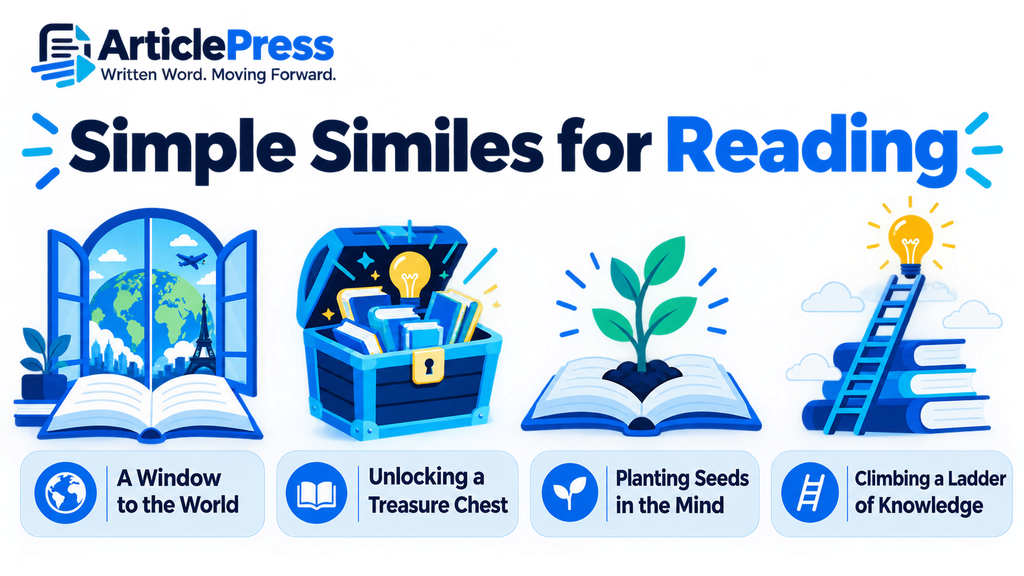
These easy-to-understand comparisons work well for students, beginners, and everyday writing.
1. Reading is like opening a window to the world
Meaning: Reading introduces people to new ideas, cultures, places, and experiences.
Example: Reading books about other countries is like opening a window to the world.
2. Reading is like traveling without leaving home
Meaning: Books allow readers to explore distant places without physically going anywhere.
Example: Through adventure novels, reading feels like traveling without leaving home.
3. Reading is like feeding your mind
Meaning: Reading provides knowledge and ideas that help the mind grow.
Example: My teacher encouraged us to read every day because reading is like feeding your mind.
4. Reading is like unlocking a treasure chest
Meaning: Reading reveals valuable knowledge, ideas, and discoveries.
Example: Every chapter was like unlocking a treasure chest filled with fascinating facts.
5. Reading is like planting seeds in the mind
Meaning: Books introduce ideas that can grow into understanding over time.
Example: Reading inspiring biographies is like planting seeds in the mind.
6. Reading is like climbing a ladder of knowledge
Meaning: Reading helps people gradually build their understanding and skills.
Example: Each book I finished felt like climbing another step on a ladder of knowledge.
7. Reading is like shining a light in the dark
Meaning: Reading can make confusing subjects easier to understand.
Example: The science book was like a light in the dark, helping me understand a difficult topic.
8. Reading is like drinking from a fountain of knowledge
Meaning: Reading gives people access to a continuous supply of information.
Example: The library felt like a fountain of knowledge where I could always discover something new.
9. A good book is like a trusted friend
Meaning: A good book offers comfort, companionship, and enjoyment.
Example: During the holidays, my favorite novel was like a trusted friend.
10. Reading is like building a bridge to new ideas
Meaning: Reading connects people with perspectives and concepts they may not encounter otherwise.
Example: Reading different viewpoints is like building a bridge to new ideas.
Creative Similes for Reading
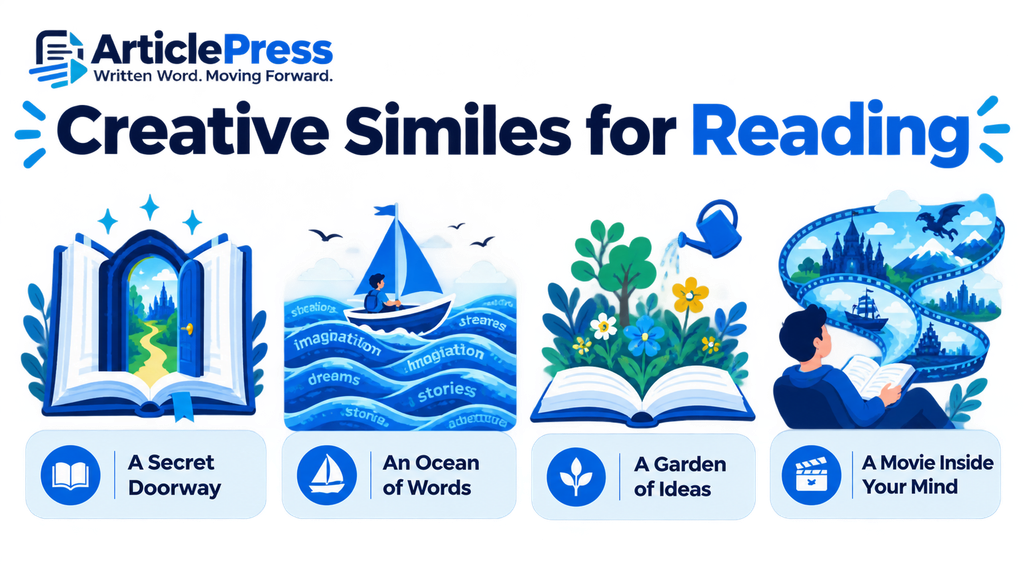
Use these more imaginative comparisons in stories, poems, reflective essays, and descriptive paragraphs.
11. Reading is like stepping through a secret doorway
Meaning: A book can lead readers into an unfamiliar world full of surprises.
Example: When I opened the fantasy novel, reading felt like stepping through a secret doorway.
12. Reading is like sailing across an ocean of words
Meaning: Reading can feel like a long journey through a vast collection of ideas.
Example: The poetry collection took me on a journey like sailing across an ocean of words.
13. Reading is like wandering through a garden of ideas
Meaning: Readers explore different thoughts and discover new insights.
Example: Reading the philosopher’s essays was like wandering through a garden of ideas.
14. A story unfolds like a ribbon in the wind
Meaning: The story develops gradually, revealing events and details along the way.
Example: The mystery unfolded like a ribbon in the wind, revealing a little more with every chapter.
15. Reading is like watching a movie inside your mind
Meaning: Words create mental pictures of characters, settings, and events.
Example: The author’s vivid descriptions made reading feel like watching a movie inside my mind.
16. A book is like a map to an undiscovered land
Meaning: Books guide readers through unfamiliar subjects or imaginary places.
Example: The historical novel was like a map to an undiscovered land.
17. Reading is like catching stars in a jar
Meaning: Reading lets people collect beautiful thoughts, memorable moments, and inspiring ideas.
Example: Writing down my favorite lines felt like catching stars in a jar.
18. Reading is like following footprints through a mystery
Meaning: Readers gather clues and gradually discover what happens next.
Example: Each new chapter was like following footprints through a mystery.
19. A novel is like a river carrying you through another life
Meaning: A story can draw readers into the experiences of its characters.
Example: The powerful novel was like a river carrying me through another person’s life.
20. Reading is like weaving a tapestry of imagination
Meaning: Reading combines words, images, emotions, and ideas into a rich mental experience.
Example: Every chapter added another thread, making reading feel like weaving a tapestry of imagination.
Similes for the Joy and Excitement of Reading
These comparisons capture the excitement of discovering a favorite book, reaching an unexpected twist, or finishing a memorable story.
21. Reading a thrilling novel is like riding a roller coaster
Meaning: The story creates sudden surprises, suspense, and excitement.
Example: The adventure novel was like riding a roller coaster, with a surprise around every corner.
22. A fascinating book is like a magnet pulling you in
Meaning: An interesting book captures attention and makes readers want to continue.
Example: The first chapter was like a magnet pulling me in until I had read half the book.
23. Reading an adventure story is like running through a storm
Meaning: The story moves quickly and fills the reader with energy and suspense.
Example: The action scenes made reading feel like running through a storm.
24. Finishing a great book is like reaching the top of a mountain
Meaning: Completing a rewarding book brings satisfaction and a sense of achievement.
Example: After finishing the long novel, I felt like I had reached the top of a mountain.
25. A surprising plot twist is like a bolt of lightning
Meaning: An unexpected event suddenly changes the reader’s understanding of the story.
Example: The final revelation struck me like a bolt of lightning.
26. Reading a funny book is like hearing a roomful of laughter
Meaning: A humorous book creates a cheerful, entertaining experience.
Example: The comic novel was like hearing a roomful of laughter, even when I was reading alone.
27. A page-turner is like a speeding train
Meaning: The story moves so quickly that readers want to keep going.
Example: The crime thriller was like a speeding train that never seemed to slow down.
28. Discovering a favorite author is like finding a hidden gem
Meaning: Finding a writer you love feels like discovering something rare and valuable.
Example: Reading her first novel was like finding a hidden gem in a crowded bookstore.
Similes for Quiet, Focused, and Peaceful Reading
These similes are useful for describing libraries, reading corners, bedtime routines, and moments of concentration.
29. Reading quietly is like floating on a calm lake
Meaning: Reading can create a peaceful feeling free from everyday distractions.
Example: On Sunday mornings, reading beside the window felt like floating on a calm lake.
30. A quiet reading room is like a sanctuary
Meaning: A peaceful reading space provides a break from noise and interruptions.
Example: The small library was like a sanctuary where I could concentrate on my studies.
31. Reading before bed is like drifting on a soft cloud
Meaning: Reading at bedtime can feel gentle, relaxing, and comforting.
Example: With a mystery novel in my hands, reading before bed was like drifting on a soft cloud.
32. Concentrating on a book is like tuning a radio to one clear station
Meaning: Focused reading helps a person block out distractions and attend to one thing.
Example: Once I settled into my reading chair, concentrating on the book was like tuning a radio to one clear station.
33. Reading poetry is like listening to rain on a rooftop
Meaning: Poetry can create a soothing rhythm and a reflective mood.
Example: The gentle verses made reading poetry feel like listening to rain on a rooftop.
34. A familiar book is like a warm cup of tea
Meaning: Rereading a beloved book can feel comforting and reassuring.
Example: On a cold evening, revisiting my favorite novel was like enjoying a warm cup of tea.
35. Reading in a cozy corner is like wrapping yourself in a blanket
Meaning: A comfortable reading space can feel safe, warm, and inviting.
Example: With a soft chair and a good book, reading in the corner was like wrapping myself in a blanket.
Similes for Imagination and Learning Through Reading
Use these comparisons to describe how books encourage creativity, improve understanding, and introduce new perspectives.
36. Reading is like putting on a pair of new glasses
Meaning: Reading can help people see a subject or situation differently.
Example: The memoir was like putting on a pair of new glasses because it helped me understand another person’s struggles.
37. Reading is like adding colors to a blank canvas
Meaning: Books enrich the mind with details, ideas, and creative possibilities.
Example: Every new story was like adding colors to a blank canvas in my imagination.
38. Reading is like connecting the dots in a puzzle
Meaning: Readers combine information to understand a larger idea.
Example: The history textbook helped me connect the dots in a puzzle about how the country developed.
39. Reading is like stretching the muscles of the mind
Meaning: Reading challenges the brain to think, learn, and understand new information.
Example: Tackling a difficult novel was like stretching the muscles of my mind.
40. Reading is like planting a compass in your thoughts
Meaning: Reading can provide ideas and perspectives that help guide future decisions.
Example: The book about leadership was like planting a compass in my thoughts.
41. Reading a biography is like walking in someone else’s shoes
Meaning: A biography can help readers understand another person’s experiences and choices.
Example: Reading the athlete’s biography was like walking in someone else’s shoes.
42. Reading a science book is like opening a toolbox
Meaning: Science books provide concepts and knowledge that help readers understand how things work.
Example: The guide was like opening a toolbox filled with explanations for everyday scientific questions.
43. Reading is like building a staircase one step at a time
Meaning: Learning through reading often happens gradually, with each new idea building on earlier knowledge.
Example: Learning a new language through books was like building a staircase one step at a time.
44. Reading a poem is like hearing music made of words
Meaning: Poetry uses rhythm, sound, and language to create an experience similar to music.
Example: The poet’s carefully chosen words made the poem feel like music made of words.
45. Reading is like carrying a library inside your mind
Meaning: The knowledge and experiences gained from books stay with readers long after they finish reading.
Example: After years of reading, she felt like she was carrying a library inside her mind.
Quick-Reference Table: Similes for Reading
| Simile | Meaning | Best Used For |
|---|---|---|
| Like traveling without leaving home | Exploring through books | Essays and general writing |
| Like opening a treasure chest | Discovering valuable ideas | Educational writing |
| Like watching a movie inside your mind | Creating mental pictures | Stories and reviews |
| Like riding a roller coaster | Experiencing excitement | Adventure stories |
| Like floating on a calm lake | Feeling peaceful | Reflective writing |
| Like finding a hidden gem | Discovering something special | Book reviews |
| Like stretching the muscles of the mind | Developing understanding | School assignments |
| Like walking in someone else’s shoes | Understanding another perspective | Biographies |
| Like music made of words | Experiencing poetic rhythm | Poetry |
| Like carrying a library inside your mind | Retaining knowledge | Speeches and essays |
How to Use Similes for Reading in Your Writing
The best simile depends on what you want your reader to imagine. Choose a comparison that fits the setting, mood, and purpose of your sentence.
- For school essays: Use clear comparisons such as “Reading is like climbing a ladder of knowledge.” They communicate the value of learning without distracting from your main point.
- For stories: Choose vivid images such as “The novel pulled me in like a magnet.” This helps readers understand a character’s fascination with a book.
- For poems: Use comparisons involving sound, nature, or emotion, such as “Poetry is like rain tapping on a rooftop.”
- For book reviews: Describe the reading experience honestly. A fast-paced thriller might feel like a speeding train, while a slow, thoughtful novel might resemble floating on a calm lake.
- For children’s writing: Choose familiar objects and simple images, such as a book being like a treasure chest.
How to Create Your Own Reading Simile
Try this simple process:
- Identify the experience you want to describe, such as excitement, concentration, or curiosity.
- Choose an image that creates a similar feeling or effect.
- Connect the two using like or as.
- Read the sentence aloud to check that the comparison sounds natural.
For example, if reading makes you curious, you could write: “Every chapter was like a new door waiting to be opened.”
Avoid adding a simile to every sentence. One specific, well-chosen comparison is often more effective than several competing images.
Frequently Asked Questions
1. What is a good simile for reading?
A good simile for reading is “Reading is like traveling without leaving home.” It captures how books let people explore unfamiliar places, cultures, and experiences through their imagination. It works well in essays, school assignments, and general writing.
2. What is a creative simile for reading?
“Reading is like sailing across an ocean of words” is a creative simile that presents reading as an adventure through a vast world of ideas. It works especially well in descriptive writing and poetry.
3. What is a simple simile for reading for kids?
“Reading is like opening a treasure chest” is an easy simile for children. It compares books to a box of valuable discoveries and helps young readers understand that stories can contain exciting ideas, knowledge, and adventures.
4. How do you describe reading using a simile?
Think about the feeling or experience you want to describe, then compare it with something familiar. For peaceful reading, you might say, “Reading is like floating on a calm lake.” For an exciting story, you could write, “Reading the thriller was like riding a roller coaster.”
5. What is a simile for getting lost in a book?
“Getting lost in a book is like stepping through a secret doorway” suggests that a reader becomes absorbed in a different world. Another option is “The story pulled me in like a magnet,” which emphasizes how difficult it is to stop reading.
6. Can I use similes for reading in essays and poems?
Yes. In essays, clear similes can explain how reading develops knowledge or understanding. In poems, more imaginative comparisons can create rhythm, mood, and vivid imagery. Choose a comparison that supports your purpose and fits the tone of the piece.
Practice Section: Test Your Understanding
Try these five questions to practice identifying and using reading similes.
1. Which simile best describes a book that teaches you new things?
A. Reading is like feeding your mind.
B. Reading is like running through a storm.
C. Reading is like floating on a lake.
2. Complete the simile: A suspenseful mystery novel is like ________.
3. What does “Reading is like putting on a pair of new glasses” mean?
4. Write a simile that describes reading in a quiet library.
5. Rewrite this sentence using a simile: “The story was so exciting that I could not stop reading.”
Answers
- A. Reading is like feeding your mind because it provides knowledge and ideas.
- Possible answer: “A speeding train.” This suggests a fast-moving, exciting story.
- It means reading can change how you see or understand something.
- Possible answer: “Reading in the library was like floating on a calm lake.”
- Possible answer: “The story pulled me in like a magnet.”
Your answers do not have to match these examples exactly. A different comparison can work if it makes sense and communicates the intended feeling.
Suggested Internal Links for ArticlesPress.com
Link to these related topics when the corresponding articles are available on your website:
- Similes for Imagination — connects naturally with creative comparisons about mental pictures and ideas.
- Similes for Learning — supports readers interested in knowledge and education.
- Similes for Stories — helps writers describe plots, characters, and storytelling.
- Similes for Knowledge — expands on the educational benefits of reading.
- Similes for Writing — provides additional figurative language for creative and descriptive work.
Potential Keyword-Cluster or Cannibalization Notes
The following topics are related but can serve different search intents when written with distinct examples and explanations:
- Similes for Reading: Focus on the reading experience, books, concentration, and imagination.
- Similes for Books: Focus on books as objects, sources of knowledge, companions, or gateways to other worlds.
- Similes for Stories: Focus on plots, storytelling, suspense, and narrative structure.
- Similes for Learning: Focus on acquiring skills, understanding concepts, and remembering information.
Avoid publishing several articles that repeat the same examples with only minor wording changes. If two planned pages target essentially the same audience and intent, consider combining them or giving each a clearly differentiated purpose.
Final Thoughts
Similes for reading help turn an ordinary description into something readers can picture and feel. Comparing reading to traveling, opening a treasure chest, or watching a movie inside your mind shows how books can inspire curiosity, build knowledge, and create memorable experiences.
When choosing a simile, consider what you want to emphasize. Use simple comparisons to explain ideas clearly, imaginative comparisons to enrich stories, and gentle comparisons to describe peaceful reading moments. You can also create original similes by connecting the experience of reading with familiar objects, emotions, and activities.
The strongest comparison is not necessarily the most complicated one. It is the one that expresses your meaning naturally and helps your reader see reading in a new way.

Sophia Bennett contributes to ArticlesPress with a focus on English grammar, vocabulary development, word usage, and language learning. She aims to make complex language concepts easier to understand through clear explanations, practical examples, and reader-friendly educational content.