Hate can feel like a burning fire, a poisonous thorn, or a storm gathering in a dark sky. Similes for hate help describe intense dislike, deep resentment, bitterness, and hostility through vivid comparisons. Instead of simply writing that someone hates another person, you can show how that emotion affects their thoughts, words, and actions.
These 35 similes for hate include simple, powerful, creative, and nature-inspired comparisons. Each one comes with a meaning and an example sentence to help you use it naturally in stories, poems, essays, and character descriptions.
What Does Hate Mean in a Simile?
In a simile, hate is compared to something that represents anger, pain, bitterness, destruction, or emotional distance. These comparisons help readers imagine how strong and lasting hatred can feel.
For example, “His hatred burned like a wildfire” compares an intense negative emotion to a rapidly spreading fire. The comparison suggests that his hatred is powerful and difficult to control.
35 Best Similes for Hate With Meanings and Examples
1. Powerful Similes for Hate
These comparisons describe intense hatred that feels overwhelming, destructive, or difficult to contain.
1. Hate burns like a wildfire
- Meaning: Hatred grows quickly and becomes difficult to control.
- Why It Works: A wildfire spreads rapidly and consumes everything in its path, reflecting how intense hatred can grow.
- Example: His hatred burned like a wildfire after he discovered the betrayal.
2. As bitter as poisoned fruit
- Meaning: Filled with deep resentment and unpleasant feelings.
- Why It Works: Poisoned fruit suggests something that appears ordinary but carries something harmful inside.
- Example: Her words were as bitter as poisoned fruit.
3. Hate strikes like lightning
- Meaning: Hatred appears suddenly and with great intensity.
- Why It Works: Lightning represents a sudden, powerful burst of energy.
- Example: His hatred struck like lightning when he heard the accusation.
4. As fierce as a raging storm
- Meaning: Extremely strong and difficult to calm.
- Why It Works: A raging storm represents uncontrolled emotional intensity.
- Example: The rivalry between the two families was as fierce as a raging storm.
5. Hate spreads like a contagious fire
- Meaning: Hatred passes from one person to another and grows.
- Why It Works: Fire can spread from one area to another, just as hostility can influence an entire group.
- Example: Their hatred spread like a contagious fire throughout the village.
6. As sharp as a broken blade
- Meaning: Extremely hurtful and cutting.
- Why It Works: A broken blade suggests something dangerous with an uneven, painful edge.
- Example: His hateful remarks were as sharp as a broken blade.
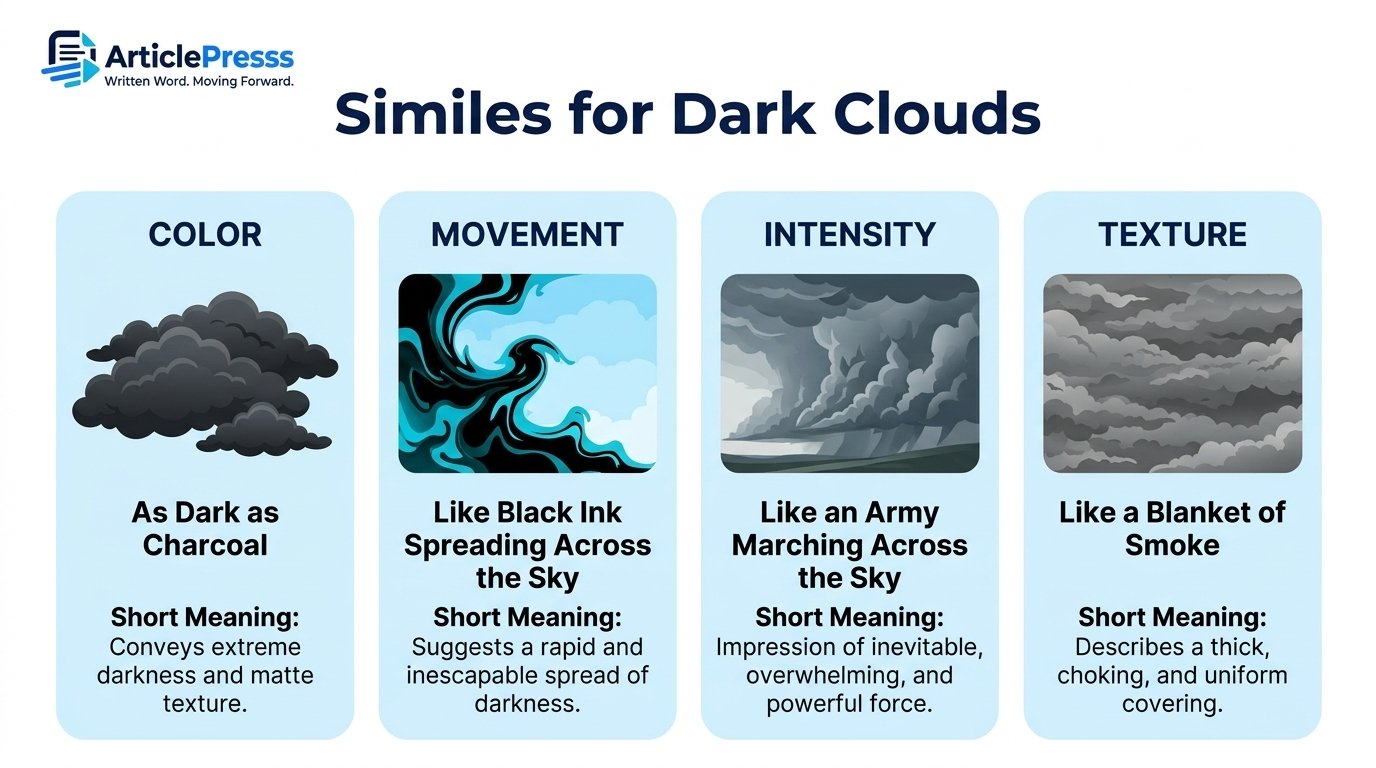
7. Hate hangs like a dark cloud
- Meaning: A constant feeling of hostility makes an atmosphere unpleasant.
- Why It Works: Dark clouds create a gloomy atmosphere, just as hatred can affect everyone nearby.
- Example: Hate hung like a dark cloud over the entire meeting.
2. Creative Similes for Hate
These imaginative comparisons help writers communicate complicated emotions without directly naming them.
8. Hate coils like a snake in the grass
- Meaning: Hidden hatred waits for an opportunity to appear.
- Why It Works: A snake concealed in grass represents secrecy and potential danger.
- Example: His hatred coiled like a snake in the grass, hidden behind a friendly smile.
9. As cold as a winter grave
- Meaning: Completely lacking warmth, kindness, or compassion.
- Why It Works: A winter grave creates an image of coldness and emotional emptiness.
- Example: After years of conflict, their relationship became as cold as a winter grave.
10. Hate grows like weeds in an abandoned garden
- Meaning: Resentment develops and spreads when left unresolved.
- Why It Works: Weeds take over neglected gardens, representing negative emotions that receive no attention.
- Example: Their hatred grew like weeds in an abandoned garden.
11. Like a thorn buried beneath the skin
- Meaning: A painful feeling of resentment that remains hidden.
- Why It Works: A buried thorn represents something small but constantly irritating.
- Example: The old insult remained like a thorn buried beneath his skin.
12. As dark as a moonless night
- Meaning: Filled with deep hostility and negativity.
- Why It Works: A moonless night creates an image of darkness and uncertainty.
- Example: His thoughts became as dark as a moonless night.
13. Hate flows like black ink through water
- Meaning: Hatred gradually spreads and affects everything around it.
- Why It Works: Ink dispersing through water creates a visual image of an emotion spreading beyond its original source.
- Example: Hate flowed like black ink through water, staining every conversation.
14. Like a locked door covered in rust
- Meaning: An unwillingness to forgive or reconnect with someone.
- Why It Works: A rusty, locked door suggests emotional separation that has lasted a long time.
- Example: His heart stood like a locked door covered in rust whenever she tried to apologize.
3. Similes for Deep Hatred and Resentment
Use these comparisons when describing long-lasting bitterness, grudges, and emotional pain.
15. As bitter as burnt coffee
- Meaning: Filled with unpleasant resentment.
- Why It Works: Burnt coffee has a harsh, unpleasant taste that reflects bitterness.
- Example: Their conversations became as bitter as burnt coffee.
16. Like a wound that refuses to heal
- Meaning: Hatred continues because an old emotional injury remains painful.
- Why It Works: An unhealed wound represents pain that has not gone away.
- Example: His resentment remained like a wound that refused to heal.
17. Hate clings like mud to shoes
- Meaning: Resentment follows someone and is difficult to leave behind.
- Why It Works: Mud sticks to shoes and travels wherever the person goes.
- Example: She carried her hatred like mud clinging to her shoes.
18. As heavy as a stone around the heart
- Meaning: Hatred creates an emotional burden.
- Why It Works: A heavy stone represents the weight of unresolved negative feelings.
- Example: His bitterness felt as heavy as a stone around his heart.
19. Like an old scar that still aches
- Meaning: Past hurt continues to produce resentment.
- Why It Works: A scar represents an injury from the past that can still remind someone of pain.
- Example: Her hatred was like an old scar that still ached whenever his name was mentioned.
20. As stubborn as roots beneath concrete
- Meaning: Deep hatred is difficult to remove or overcome.
- Why It Works: Roots can continue growing beneath hard surfaces, representing emotions that survive attempts to suppress them.
- Example: His resentment was as stubborn as roots beneath concrete.
21. Like smoke trapped inside a room
- Meaning: Negative feelings fill an environment and affect everyone in it.
- Why It Works: Trapped smoke creates discomfort and makes the air difficult to breathe.
- Example: Their hatred lingered like smoke trapped inside a room.
4. Similes for Hidden Hate and Hostility
These examples are useful when describing characters who conceal their true feelings behind politeness or silence.
22. As cold as an abandoned house
- Meaning: Emotionally distant and unfriendly.
- Why It Works: An empty house suggests a lack of warmth and human connection.
- Example: His greeting was as cold as an abandoned house.
23. Like ice beneath a warm smile
- Meaning: Concealing hostility while appearing friendly.
- Why It Works: The contrast between warmth and ice reflects the difference between outward behavior and inner feelings.
- Example: She greeted her rival with a smile, but her hatred remained like ice beneath a warm smile.
24. Hate hides like a shadow behind a curtain
- Meaning: Hostility remains concealed from other people.
- Why It Works: A hidden shadow suggests something present but not immediately visible.
- Example: His resentment hid like a shadow behind a curtain.
25. As silent as a graveyard at midnight
- Meaning: Hatred is expressed through silence rather than words.
- Why It Works: A quiet graveyard creates an atmosphere of tension and emotional distance.
- Example: Their dinner conversation was as silent as a graveyard at midnight.
26. Like a wolf disguised as a lamb
- Meaning: Someone hides harmful intentions behind an innocent appearance.
- Why It Works: The contrast between a dangerous wolf and a gentle lamb represents concealed hostility.
- Example: He acted like a wolf disguised as a lamb, pretending to be friendly while secretly resenting his colleagues.
5. Nature-Inspired Similes for Hate
Natural elements provide powerful imagery for describing the destructive and persistent qualities of hatred.
27. As hot as molten lava
- Meaning: Filled with intense anger and hostility.
- Why It Works: Molten lava represents extreme heat and destructive force.
- Example: His hatred was as hot as molten lava after the argument.
28. Like frost covering a flower
- Meaning: Hatred destroys warmth, affection, and beauty in a relationship.
- Why It Works: Frost can damage delicate flowers, just as hostility can harm affection.
- Example: Their friendship faded like a flower covered in frost.
29. Like roots strangling a tree
- Meaning: Hatred slowly damages something that once grew healthily.
- Why It Works: The image suggests that something normally associated with growth has become harmful.
- Example: Resentment spread through their friendship like roots strangling a tree.
30. As relentless as crashing ocean waves
- Meaning: Hatred continues repeatedly without giving anyone peace.
- Why It Works: Repeated waves represent a force that keeps returning.
- Example: His hostility was as relentless as crashing ocean waves.
31. Like a poisonous vine around a tree
- Meaning: Hatred gradually takes control of a relationship or situation.
- Why It Works: A vine wrapping around a tree creates an image of something slowly restricting another living thing.
- Example: Jealousy and hatred wrapped around their friendship like a poisonous vine around a tree.
32. As dark as a thundercloud
- Meaning: Full of hostility, anger, and threatening emotions.
- Why It Works: Thunderclouds create a threatening atmosphere before a storm.
- Example: His expression became as dark as a thundercloud.
6. Short and Simple Similes for Hate
These straightforward comparisons are useful for students, beginners, and everyday writing.
33. Like fire in dry grass
- Meaning: Hatred spreads quickly.
- Example: The argument spread like fire in dry grass.
34. As cold as ice
- Meaning: Showing no warmth, kindness, or affection.
- Example: He treated his former friend as cold as ice.
35. Like poison in a well
- Meaning: Hatred contaminates relationships and affects everyone involved.
- Example: Their constant hostility spread like poison in a well.
Quick-Reference Table: Similes for Hate
| Simile | Meaning | Best Used For |
| Burns like a wildfire | Uncontrolled hatred | Intense emotions |
| Like a thorn beneath the skin | Hidden resentment | Old grudges |
| As cold as ice | Lack of warmth | Character descriptions |
| Like a poisonous vine | Destructive hostility | Relationships |
| As bitter as burnt coffee | Deep bitterness | Arguments |
| Like smoke in a room | Uncomfortable atmosphere | Stories |
| Like a wolf disguised as a lamb | Hidden hostility | Fiction |
| Like fire in dry grass | Quickly spreading hate | Conflict |
| As heavy as a stone around the heart | Emotional burden | Poetry |
| Like a wound that refuses to heal | Lasting resentment | Emotional writing |
How to Use Similes for Hate in Writing
A good simile should communicate the type of hatred you want readers to imagine. Not every comparison expresses the same emotion.
Here are three ways to use these comparisons effectively.
1. Show the Intensity of Hatred
When describing powerful hatred, choose comparisons involving fire, storms, or destructive natural forces.
Plain sentence: He hated his rival.
Improved sentence: His hatred burned like a wildfire, consuming every peaceful thought he had.
The second sentence makes the emotion more vivid and dramatic.
2. Describe Hidden Resentment
When a character hides their feelings, use comparisons involving shadows, ice, or concealed dangers.
Plain sentence: She secretly hated her neighbor.
Improved sentence: Her resentment coiled like a snake in the grass beneath her polite smile.
This reveals the difference between her outward behavior and inner feelings.
3. Express Long-Lasting Bitterness
For old conflicts, choose comparisons involving wounds, scars, stones, or roots.
Plain sentence: He never forgot the betrayal.
Improved sentence: His resentment remained like an old scar that still ached whenever he remembered the betrayal.
This communicates how past experiences continue to affect the character.
Using Hate Similes With “Like” and “As”
Most similes for hate follow two common structures.
Using “like”:
- His hatred spread like wildfire.
- Her resentment remained like a thorn beneath her skin.
- Their hostility filled the room like poisonous smoke.
Using “as”:
- His expression was as cold as ice.
- Her bitterness was as deep as an endless well.
- Their rivalry was as fierce as a raging storm.
Both structures work well in descriptive writing. Choose the one that makes your sentence sound natural.
Frequently Asked Questions
1. What is a good simile for hate?
A good simile for hate is “His hatred burned like a wildfire.” It describes an intense emotion that grows quickly and becomes difficult to control.
2. What is a powerful simile for hatred?
“His hatred was as fierce as a raging storm” is a powerful comparison. It suggests overwhelming hostility and emotions that are difficult to calm.
3. How do you describe hatred in creative writing?
You can describe hatred through comparisons involving fire, poison, storms, thorns, darkness, or coldness. For example, “Her resentment spread like a poisonous vine around their friendship.”
4. What is a simile for deep resentment?
“Resentment is like a wound that refuses to heal” is an effective simile. It describes emotional pain that continues long after an unpleasant experience.
5. What is a simple simile for hate for students?
“Hate spreads like fire in dry grass” is an easy simile for students. It compares hatred to fire because both can spread quickly.
6. Can similes for hate be used in poems?
Yes. Similes can make poems more emotional and expressive. Comparisons involving darkness, storms, broken flowers, and coldness can help communicate bitterness, hostility, and emotional separation.
Practice: Test Your Understanding of Similes for Hate
Complete these five exercises to see how well you understand the comparisons.
1. Complete the simile: His hatred burned like a ______.
2. Choose the best comparison: Which simile describes hidden hostility?
- A. As bright as the morning sun
- B. Like a snake in the grass
- C. As soft as cotton
3. Identify the meaning: What does “like a wound that refuses to heal” suggest?
- A. Happiness that grows
- B. Resentment that lasts
- C. A sudden surprise
4. Complete the sentence: Her expression was as cold as ______.
5. Create your own: Write a simile that describes hatred spreading between two friends.
Practice Answers
- Wildfire.
- B. Like a snake in the grass.
- B. Resentment that lasts.
- Ice.
- Answers will vary. Example: “Their hatred spread like cracks across a glass window.”
Final Thoughts
Similes for hate help turn a difficult emotion into something readers can picture and understand. Comparisons such as hatred burning like a wildfire, resentment lingering like an old scar, or hostility hiding like a snake in the grass give descriptive writing greater emotional depth. The best comparison depends on what you want to communicate. Use fire and storms for intense hostility, wounds and scars for lasting resentment, and shadows or ice for concealed feelings. By choosing images that match the situation, you can create more natural, memorable, and expressive sentences.

The ArticlesPress editorial team writes and reviews every guide on similes and figurative language, with clear meanings and example sentences for students, teachers and writers.